
Using a mini trencher for pipe routes and controller wires
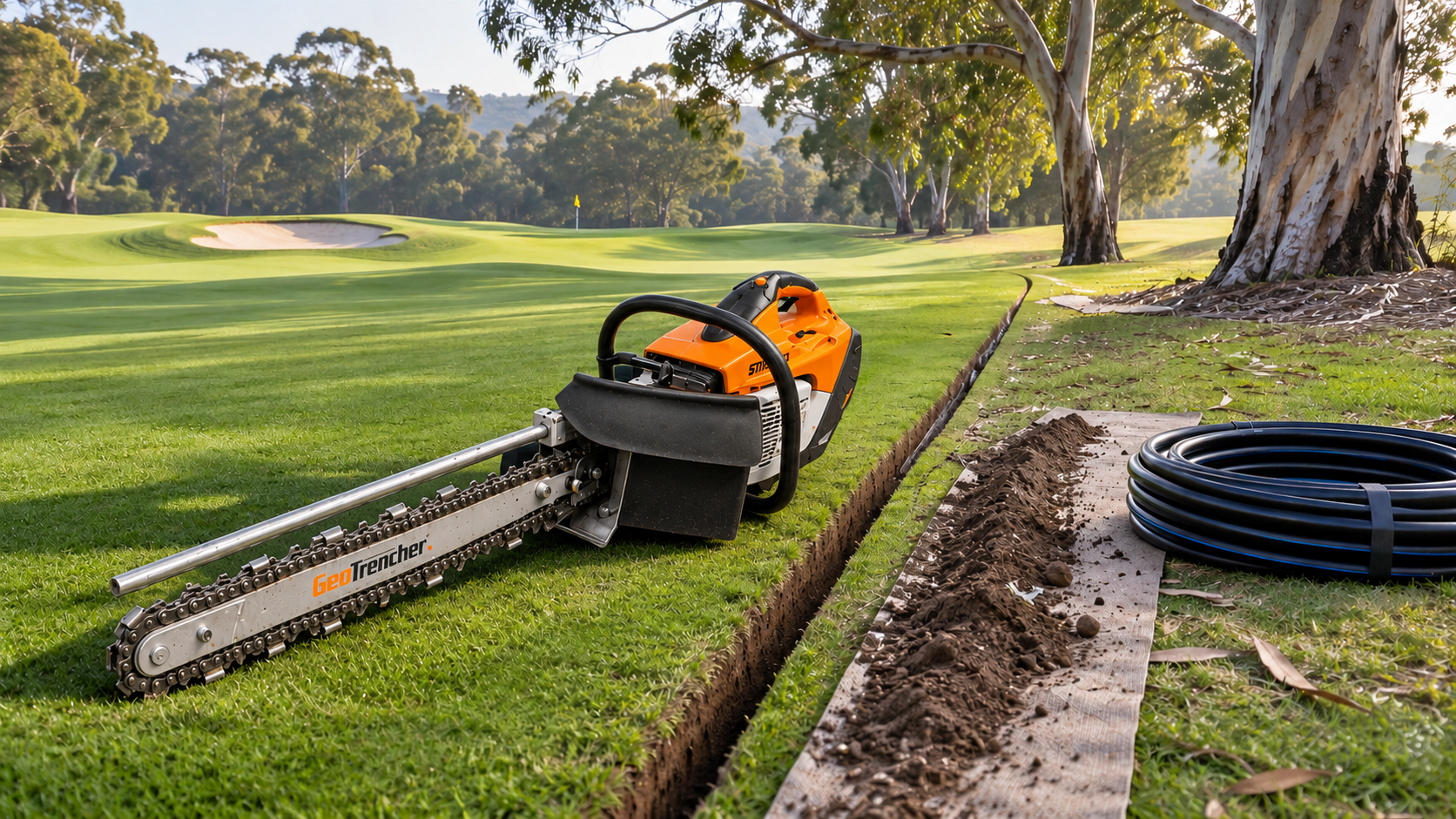
A mini trencher for irrigation can be a practical option for small pipe routes and control wiring on a golf course.
The key is to match the excavation to the irrigation design. A narrow trench is useful only when it provides
enough space and suitable cover for the pipe, cable, bedding and connections being installed.
Identify Which Irrigation Jobs Need a Trench
An irrigation upgrade might involve extending a small supply line, adding a sprinkler connection or replacing
controller wiring. These tasks have different installation needs. Map the route and confirm pipe diameter, cable
type, connection locations and access for future repairs before selecting equipment. Large irrigation mains may
require a wider excavation and another machine.
Plan Controller Wiring Alongside the Irrigation Design
Controller wires link the irrigation control system to components in the field. Confirm the system designer’s
requirements for cable protection, connections and separation from other services. Do not assume every cable
can share the pipe trench. Keeping an accurate route record can make later fault finding easier and help the next
maintenance team avoid damage.
Where the GeoTrencher Stihl TS710i Fits
The compact TS710i GeoTrencher is an option to discuss for narrow installation routes. Confirm the actual
trench width available from the selected chain and the working depth achievable in your soil. Ask whether the
optional GeoCart would suit the route and handling needs. The correct setup depends on the complete
installation rather than pipe diameter alone.
Protect the course before excavation starts
Check current service plans and locate existing irrigation, drainage and electrical assets. Course records may not
show every private service, so resolve uncertain locations before digging. Mark the work area, organise access
around play and keep spoil away from sensitive surfaces. Near a putting green, agree the route and restoration
approach with the superintendent first.
Backfill with the finished surface in mind
Inspect and test the installation before closing the trench. Follow the designer’s requirements for bedding,
backfill and compaction, then reinstate turf to the course’s maintenance standard. Monitor for settlement and
changes in drainage after the work. A small opening still needs careful restoration to avoid an uneven surface or
a recurring maintenance problem.
Choose equipment around the installation
For repeated small upgrades, owning suitable equipment may make scheduling easier. Compare that benefit
with hire, subcontracting, storage and ongoing maintenance costs. To discuss a TS710i for your irrigation work,
call David McNabb on 0422 033 111. Provide the pipe and cable requirements so the team can assess the
proposed trench.
